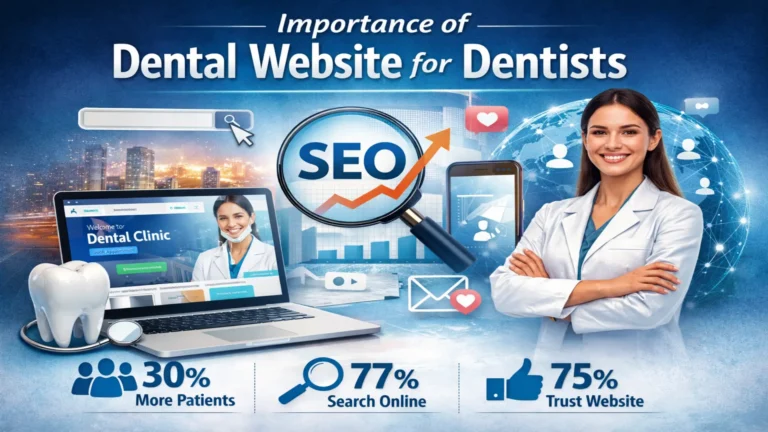

Top Dental Website Trends for 2026
In 2026, your dental website is no longer just a digital brochure, it’s your most powerful patient acquisition tool. As competition across the United States continues to grow, dentists who invest in modern, high-performing websites are the ones consistently filling their appointment calendars.
If your website feels outdated or isn’t converting visitors into patients, you’re already falling behind. Let’s explore the top dental website trends for 2026 that are helping successful practices attract more patients, build trust, and grow faster.
1. Patient-Centered Website Design
Today’s patients expect more than just information, they expect an experience. Modern dental websites are designed around user intent, making it easy for visitors to find answers, book appointments, and contact your clinic without frustration.
Key elements include:
- Simple navigation with clear service categories
- Fast-loading pages (under 3 seconds)
- Prominent “Book Appointment” buttons
- Mobile-first layouts
A patient-centered design reduces bounce rates and increases conversions—two critical ranking factors for SEO.
2. AI-Powered Chat & Appointment Booking
Artificial Intelligence is transforming how dental practices interact with patients online. In 2026, smart chat systems are becoming standard on high-performing dental websites.
Benefits:
- 24/7 patient engagement
- Instant answers to common questions
- Automated appointment scheduling
- Reduced front desk workload
This trend is especially effective for capturing leads outside office hours, when most competitors are unavailable.
3. Hyper-Local SEO Optimization
Ranking on search engines is no longer about broad keywords, it’s about local dominance. Dental websites are now optimized to target very specific geographic searches like:
- “Dentist near me”
- “Emergency dentist in [city]”
- “Cosmetic dentist in [area]”
To stay competitive in the USA market, your website must include:
- Location-specific landing pages
- Optimized Google Business Profile integration
- Local schema markup
- Consistent NAP (Name, Address, Phone) data
This ensures your practice appears exactly when potential patients are searching.
4. Conversion-Focused Design (CRO)
Traffic without conversions is a wasted opportunity. In 2026, dental websites are built with Conversion Rate Optimization (CRO) at the core.
High-converting websites include:
- Strategic call-to-action buttons
- Patient testimonials and reviews
- Before-and-after galleries
- Trust badges and certifications
Every element is designed to guide visitors toward one goal: booking an appointment.
5. Video Content Integration
Video is becoming one of the most powerful tools in dental marketing. Patients feel more comfortable choosing a dentist when they can see and hear you before visiting.
Popular video content includes:
- Dentist introduction videos
- Treatment explanations
- Patient testimonials
- Office tours
Websites with video content not only build trust faster but also improve engagement and SEO rankings.
6. Mobile-First & Speed Optimization
Over 70% of dental website traffic now comes from mobile devices. If your website isn’t optimized for smartphones, you’re losing potential patients every day.
In 2026, top-performing dental websites:
- Load in under 2 seconds
- Are fully responsive on all devices
- Use compressed images and clean code
- Offer click-to-call functionality
Google also prioritizes mobile-friendly websites in search rankings, making this trend essential—not optional.
7. Secure & HIPAA-Compliant Websites
Patient trust is everything in healthcare. With increasing concerns around data privacy, secure websites are a must.
Modern dental websites now include:
- SSL certificates (HTTPS)
- Secure contact forms
- HIPAA-compliant patient communication tools
- Regular security updates
A secure website not only protects your patients but also improves your credibility and SEO performance.
8. Personalized User Experience
Personalization is becoming a key differentiator. Advanced dental websites now adapt content based on user behavior.
Examples:
- Showing relevant services based on search history
- Personalized offers for returning visitors
- Dynamic content based on location
This creates a more engaging experience and significantly increases conversion rates.
9. Integrated Marketing Ecosystem
Your website is no longer a standalone asset, it’s the center of your entire digital marketing strategy.
In 2026, successful dental websites will integrate seamlessly with:
- SEO campaigns
- Google Ads (PPC)
- Social media marketing
- Email marketing systems
This unified approach ensures consistent branding, better tracking, and higher ROI.
10. Authentic Branding & Storytelling
Patients don’t just choose dentists, they choose people they trust. Modern dental websites are focusing heavily on authentic branding.
This includes:
- Your story and mission
- Team introductions
- Real patient success stories
- Community involvement
Authenticity builds emotional connection—and emotional connection drives patient decisions.