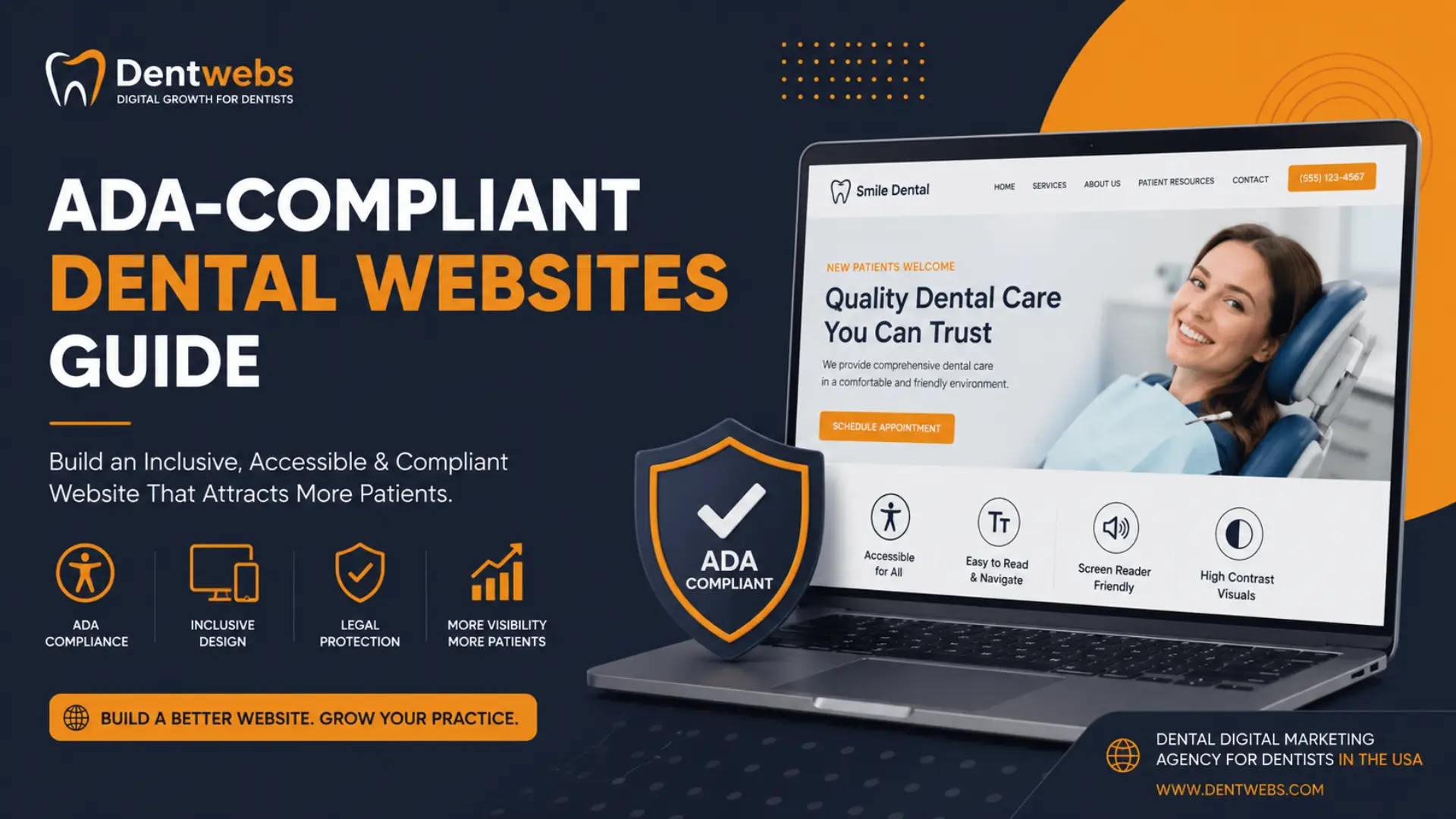
ADA-Compliant Dental Websites Guide
Why ADA Compliance Is No Longer Optional
If your dental website isn’t accessible, you’re not just missing patients, you could be risking legal exposure.
An ADA dental website ensures that patients with disabilities can easily navigate, understand, and interact with your content. In the United States, accessibility is tied to the Americans with Disabilities Act, which applies to digital experiences just as much as physical clinics.
Today’s patients expect convenience, clarity, and inclusivity. An ADA-compliant website delivers all three—while also strengthening your brand reputation and SEO performance.
What Is an ADA-Compliant Dental Website?
An ADA-compliant website follows accessibility best practices so users with visual, auditory, or motor impairments can use it without barriers.
This typically aligns with the Web Content Accessibility Guidelines, which outline how to make web content more accessible.
In simple terms, your dental website should be:
- Easy to read
- Easy to navigate
- Usable with assistive technologies
Why ADA Compliance Matters for Dental Practices
1. Reach More Patients
Millions of Americans live with disabilities. If your website isn’t accessible, you’re unintentionally turning them away.
2. Improve SEO Rankings
Search engines favor accessible websites because they provide better user experiences. Clean structure, alt text, and proper headings all boost rankings.
3. Reduce Legal Risks
ADA-related lawsuits against healthcare websites are increasing. Compliance helps protect your practice from costly legal issues.
4. Build Trust and Credibility
An accessible website signals professionalism, care, and inclusivity—qualities patients value in a dental provider.
Key Features of an ADA Dental Website
1. Accessible Navigation
Menus should be simple, consistent, and usable via keyboard.
2. Alt Text for Images
Every image must include descriptive text for screen readers.
3. Readable Typography
Use clear fonts, proper contrast, and scalable text sizes.
4. Video Accessibility
Include captions and transcripts for all video content.
5. Fast Load Speed
Accessibility also includes performance—slow sites frustrate all users.
6. Mobile Responsiveness
Your site must work seamlessly across all devices.
Common ADA Compliance Mistakes Dentists Make
- Using low-contrast colors
- Missing alt text on images
- Complex navigation menus
- Non-captioned videos
- Ignoring keyboard usability
These small oversights can create major barriers for users—and missed opportunities for your practice.
How ADA Compliance Impacts Your Growth
An ADA-compliant dental website doesn’t just check a legal box—it actively drives results:
- Higher patient engagement
- Increased appointment bookings
- Lower bounce rates
- Stronger local SEO visibility
Accessibility and performance go hand in hand.
How Dentwebs Helps You Stay Compliant
At Dentwebs, we specialize in building high-performance dental websites tailored for U.S. practices.
Our ADA-focused approach includes:
- Full accessibility audits
- WCAG-compliant design
- SEO optimization
- Conversion-focused layouts
We don’t just design websites—we build patient-generating systems.