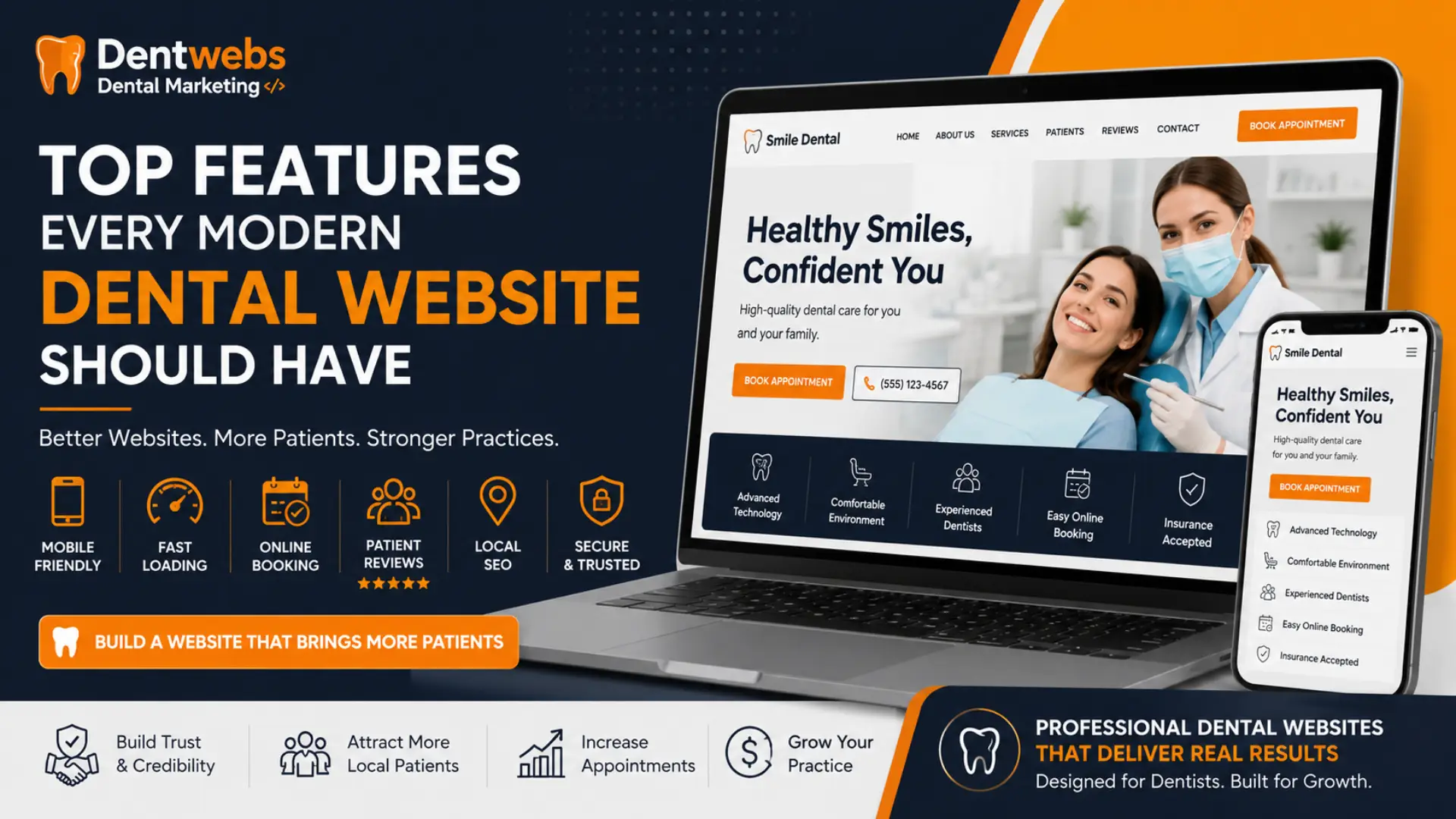
Top Features Every Modern Dental Website Should Have
Your dental website is often the first interaction a potential patient has with your practice. Before they make a phone call or schedule an appointment, they’re already judging your credibility, professionalism, and quality of care based on your website.
An outdated or slow website can cause prospective patients to leave within seconds, while a modern, professionally designed website can turn visitors into loyal patients.
Whether you’re opening a new practice or upgrading an existing website for dentists, understanding what today’s patients expect is essential.
In this guide, we’ll walk through the most important features every successful dental website should include and explain how each one contributes to attracting more patients and growing your practice.
Why Your Dental Website Matters
Patients no longer choose a dentist simply because they’re nearby. They compare practices online, read reviews, browse treatment pages, and often decide whether to contact a practice before ever making a phone call.
A professional website for dental clinics should help visitors:
- Learn about your services
- Build trust in your expertise
- Find your location easily
- Book appointments quickly
- Contact your office without frustration
If your website isn’t accomplishing these goals, you’re likely losing patients to competitors.
1. Mobile-Friendly Design
More than half of dental website traffic comes from smartphones. Your website should automatically adjust to every screen size, making it easy for visitors to:
- Read content
- Tap buttons
- Call your office
- Schedule appointments
- View treatment information
A responsive design also improves your Google rankings.
2. Fast Loading Speed
Patients expect websites to load almost instantly. If your pages take more than a few seconds to appear, many visitors will simply leave.
A fast website improves:
- User experience
- SEO rankings
- Appointment conversions
- Patient satisfaction
Speed optimization includes:
- Image compression
- Modern coding practices
- Fast hosting
- Browser caching
- Optimized scripts
3. Clear Navigation
Visitors shouldn’t have to search for important information. Your navigation menu should include:
- Home
- About
- Dental Services
- Meet the Dentist
- Patient Resources
- Reviews
- Contact
Simple navigation encourages visitors to stay longer and explore your practice.
4. Online Appointment Booking
Patients appreciate convenience. Allowing visitors to request appointments online increases conversion rates and reduces phone interruptions for your staff.
A booking form should be:
- Easy to complete
- Mobile-friendly
- Secure
- Available 24/7
Patients often schedule appointments outside office hours.
5. Professional Photos
Authentic photography builds trust. Include high-quality images of:
- Your dental team
- Reception area
- Treatment rooms
- Technology
- Exterior of your practice
Avoid generic stock photos whenever possible. Patients want to see the people they’ll actually meet.
6. Detailed Service Pages
Every major treatment deserves its own dedicated page. Examples include:
- Dental Implants
- Invisalign
- Cosmetic Dentistry
- Teeth Whitening
- Emergency Dentistry
- Veneers
- Family Dentistry
Dedicated pages improve SEO while helping patients understand your services.
7. Strong Calls-to-Action
Every page should encourage visitors to take the next step. Effective CTAs include:
- Book Appointment
- Call Now
- Request Consultation
- Contact Us
- Get Started
Place CTAs throughout the website—not just on the homepage.
8. Patient Reviews and Testimonials
Social proof is one of the strongest trust signals. Display authentic reviews from satisfied patients throughout your website. Reviews help reassure new visitors that they’re making the right choice.
Consider adding:
- Google Reviews
- Patient testimonials
- Video testimonials
- Before-and-after cases (where appropriate)
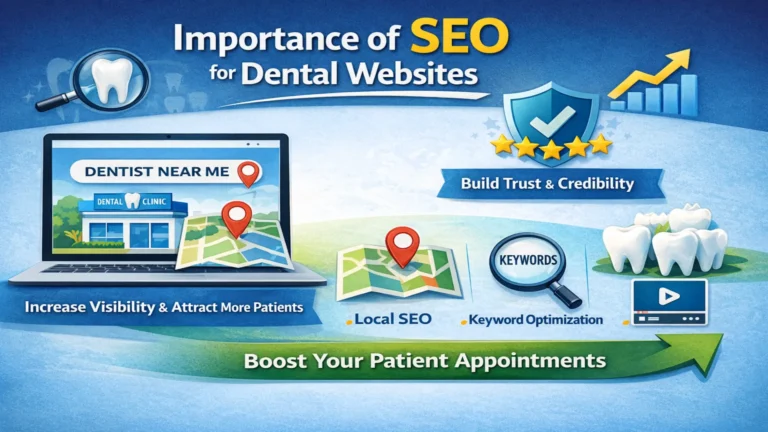
9. Local SEO Optimization
Even the best-looking dental websites won’t generate patients if nobody can find them. Local SEO helps your practice appear when people search for:
- Dentist near me
- Family dentist
- Cosmetic dentist
- Emergency dentist
Important local SEO elements include:
- Optimized page titles
- Local keywords
- Google Business Profile integration
- Location pages
- Schema markup
- Consistent contact information
10. Easy Contact Information
Never make visitors search for your phone number. Your website should display:
- Phone number
- Address
- Office hours
- Interactive map
- Contact form
Make the phone number clickable on mobile devices.
11. Secure HTTPS Website
Patients trust secure websites. HTTPS encryption protects patient information and improves Google rankings. A secure website also gives visitors confidence when submitting forms.
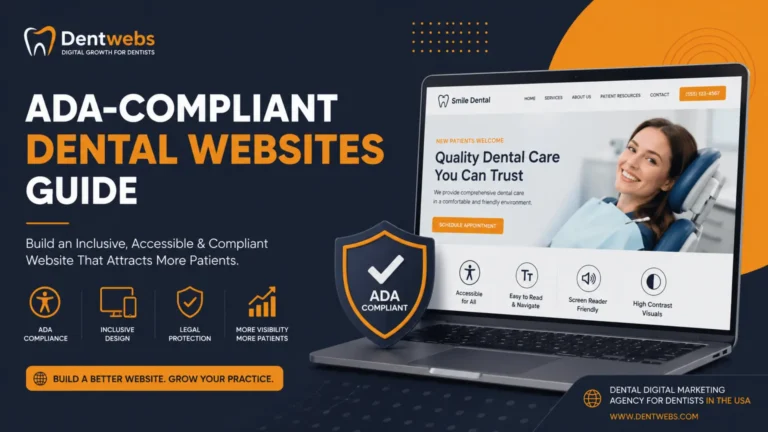
12. ADA Accessibility
Accessibility isn’t just good practice—it also helps you serve more patients. An accessible website makes it easier for people with disabilities to:
- Navigate pages
- Read content
- Use forms
- Schedule appointments
Accessibility features include:
- Keyboard navigation
- Alt text for images
- Proper color contrast
- Readable typography
- Screen reader compatibility
13. Educational Blog
Publishing helpful articles regularly can significantly improve SEO. Topics may include:
- Oral hygiene tips
- Dental implants
- Invisalign
- Teeth whitening
- Pediatric dentistry
- Emergency dental care
Helpful content builds authority and increases organic traffic over time.
14. Modern Visual Design
Today’s patients associate a clean, modern website with a professional dental practice. Your website should feature:
- Clean layouts
- Consistent branding
- Professional typography
- High-quality graphics
- Clear spacing
- Modern colors
An outdated design can negatively affect first impressions—even if your clinical care is exceptional.
15. Conversion-Focused Design
The purpose of your website isn’t simply to look attractive. Its primary goal is to generate more patients. Every page should guide visitors toward taking action, whether that’s:
- Calling your office
- Booking an appointment
- Filling out a contact form
- Requesting more information
Small design improvements can lead to significant increases in patient inquiries.
Common Mistakes Dental Websites Make
Many dental practices unintentionally lose potential patients due to avoidable website issues, such as:
- Slow loading pages
- Outdated design
- Broken links
- Poor mobile experience
- Missing SEO optimization
- Weak calls-to-action
- Generic content
- Difficult navigation
- Missing trust signals
- No appointment booking option
Addressing these issues can dramatically improve user experience and conversion rates.
Why Choose Dentwebs?
At Dentwebs, we build high-performing dental websites exclusively for dentists across the United States.
Our websites are designed to:
- Generate more patient inquiries
- Improve Google rankings
- Increase appointment bookings
- Load quickly
- Work perfectly on every device
- Support long-term practice growth
Because we work only with dental practices, every website we create is built around the unique needs of dentists and their patients.
Frequently Asked Questions
What should a modern dentist website include?
Mobile-friendly design, fast speed, online booking, service pages, reviews, SEO, HTTPS security, and clear contact details.
Why is a dental website important?
It builds trust, shows expertise, improves visibility, and helps turn visitors into patients.
How do dental websites attract patients?
Through SEO, reviews, clear information, easy booking, and a strong first impression.
Is mobile-friendly design necessary?
Yes. Most users browse on phones, and mobile-friendly sites improve usability and rankings.
How does SEO help dentists?
It helps your website rank higher on Google and brings in local patients searching for dental services.
Best platform for dental websites?
WordPress is widely used for its flexibility, SEO benefits, security, and scalability.
How often should a dental website be updated?
Regularly—whenever services or details change, plus ongoing content and software updates.
What security is needed for dental websites?
SSL (HTTPS), secure hosting, backups, malware protection, and updated software.
How fast should a dental website load?
Ideally within 2–3 seconds for better user experience and SEO.
Can patients book appointments online?
Yes, online booking allows 24/7 scheduling and reduces admin workload.
What pages are essential?
Home, About, Services, Reviews, Gallery, Insurance, Blog, FAQs, Contact, and Booking.
How can Dentwebs help?
Dentwebs builds fast, SEO-optimized dental websites designed to attract and convert more patients.